It is a fact that over 25% of home septic breakdowns are directly linked to a simple lack of consistent upkeep? This alarming reality underscores a widespread issue for countless residents.
Read here about septic pumping

Visit online about septic pumping

Learn more about septic pumping
If you have an on-site wastewater treatment setup, knowing the right maintenance timeline is more than a recommendation—it is crucial for safeguarding your asset and your home.
A common mistake is to view this essential system as a set-it-and-forget-it item. Actually, it is a biological component of your land that needs ongoing checks to work properly.
Adhering to a proper maintenance plan stops catastrophic blockages, foul smells, and costly emergency fixes. The following information will assist you in determining the ideal timeline for your specific household needs.
Experts like Septic Services of LA offer the professional guidance and trustworthy care required to keep everything running smoothly for many years.
Essential Learnings
- Routine maintenance is critical to avoid malfunctions.
- Your household size and daily water consumption decide your ideal service schedule.
- Overlooking maintenance can result in very expensive repairs and health risks.
- Saving documentation of maintenance history is a vital component of proper management.
- Professional companies offer the expertise needed for optimal system performance.
- This article will cover the primary variables and red flags you should understand.
Understanding Your Septic System
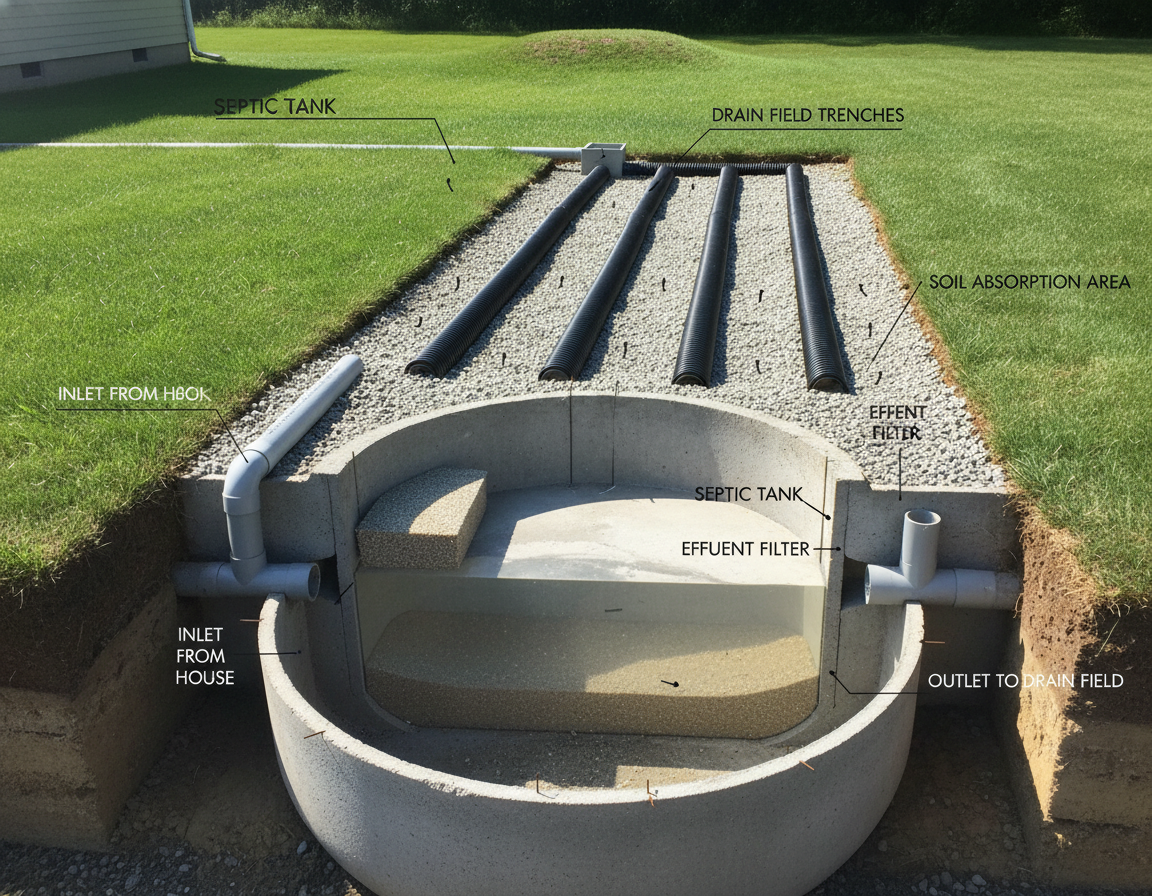
Under your yard exists a sophisticated treatment facility that manages all domestic waste naturally. This buried setup consists of three main working parts that work in unison.
The initial part is the collection tank, which gathers all drainage first. Then there is the leach field, which distributes treated liquid into the earth. The surrounding earth acts as the last purification step.
When wastewater enters the tank, gravity starts sorting the waste. Heavy solids fall to the floor, forming a layer called sludge. Less dense substances like grease and fats rise to the top, creating a scum layer.
The area in between contains clarified liquid known as wastewater. This relatively clean water subsequently exits to the leach bed for additional cleaning.
Good microorganisms in both the tank and soil play vital roles in digesting organic matter. These tiny helpers help protect local water sources by decomposing harmful components.
Knowing this cycle demonstrates why routine care is mandatory. The experts from Septic Services of LA can explain how your unit functions when they service your home.
Elements Influencing Cleaning Frequency
The specific details of your household have a big impact in determining the right maintenance schedule. The amount of residents residing in the home directly affects the speed of sludge buildup.
More people result in more showers, laundry loads, and bathroom usage. Every one of these actions add to quicker loading of your buried tank.
The volume of the septic unit is just as critical. Bigger tanks can handle more waste and need service less often than smaller ones for the same household size.
| Household Factor | Light Usage | High Impact Scenario | Service Schedule |
|---|---|---|---|
| Family Size | Couple or single | Many residents | Every 3-5 years vs. 1-2 years |
| Tank Capacity | Big system | Standard size | Rarely vs. Often |
| Water Consumption | Efficient appliances | Wasteful habits | Longer wait vs. Sooner service |
| Debris Input | No disposal usage | Heavy disposal use | More time vs. Less time |
Water conservation habits and appliance efficiency also influence your timeline. Vintage tanks or units with damage might require more regular professional evaluation.
Septic Services of LA reviews all these elements when they inspect. They design custom schedules that avoid wasting money on pumps while avoiding system problems.
Correct assessment allows property owners to save money with system protection. Tailored timelines ensure optimal performance for your specific situation.
Identifying Signs Your Septic Tank Needs Pumping
The septic unit signals if service is due via obvious signs on the property. Spotting these clues fast can prevent major issues and save you significant repair costs.
Sluggish pipes all over the home that won’t clear with a plunger are usually the first clue. When multiple fixtures drain sluggishly, the tank may be reaching capacity.
Bad smells near the treatment area or drain field indicate escaping gases from an packed tank. The odor implies sewage is backing up.
Standing water or unusually green grass patches above the drain field show that effluent isn’t absorbing properly. Bubbling noises in pipes and weak toilet flushes also hint that urgent help is likely needed.
Homeowners can check levels using a long stick with velcro attached to check the solid layer. If sludge is 12 inches deep on the floor or scum is 6 inches thick, you need a pro.
Nevertheless, opening the access port can be dangerous. Septic Services of LA provides thorough inspections that remove danger and give precise results including pictures of the real situation.
Professional checking finds issues prior to disasters, making sure the unit receives proper care at the right time.
Suggested Pumping Intervals For Your Residence
Many homeowners wonder how often their septic setup needs service. Standard rules say tanks require pumping every three to five years. This is a baseline not a hard law.
The household details decides the perfect schedule. A 4-person home with a standard 1,000-gallon unit usually requires a pump every two and a half to three years. Smaller containers for the same household size might need faster cleaning.
| Residents Count | Tank Capacity (Gallons) | Avg Frequency | Real-Status Rule |
|---|---|---|---|
| Small family | Small to Medium | Long interval | Check layer depth |
| 3-4 people | Standard Plus | Medium interval | Monitor base layer |
| Large Family | 1,500+ | 1-3 years | Monitor scum at 6 inches thick |
Calendar schedules are not as good as condition-based schedules. Certain homeowners pump their tanks more often than necessary. This wastes money and hurts the good bugs.
The bacteria require a few weeks to recover after service. Excessive attention can hurt the biological digestion. The best way relies on real data.
Septic Services of LA formulates custom plans via expert checks. They look at your specific unit conditions and usage habits. The team maintain detailed records to establish optimal future service intervals.
Tips For Successful Septic Care And Cleaning
Small daily actions can greatly prolong the life of your septic system. The pros from Septic Services of LA remind you that every drop from the drains passes through this underground system. Good maintenance helps keep septic components working perfectly for years.
Saving water plays a crucial role in maintenance. Shower quickly and repair drips fast. Run dishwashers and washing machines only when full to reduce strain on the tank.
Be mindful about what goes down your drains. Don’t dump grease, chemicals, or non-biodegradable items down the drain. The commode is only for waste and tissue—not household trash.
Protect your drain field by moving downspouts away from the area. Don’t drive cars over this critical component. Keep trees and large shrubs at a safe distance to stop root intrusion.
Regular inspections every 1-3 years spot minor problems prior to costly failure. Following these practices will keep your septic system healthy and stretch the time between necessary service appointments.
Preparing For Your Septic Tank Pump-Out
A little advance planning helps a lot when it’s time for your regular system maintenance. Proper preparation ensures the service team from Septic Services of LA can work efficiently and effectively.
First, find your buried tank. Check property records or trace the pipe from your home. Most systems are buried 10-25 feet from the building.
Clean up the spot of obstacles prior to arrival. Move stones and pots, and cut back bushes. Ensure the service truck has easy access to the site.
If the access port is buried, uncover it yourself to save time. Technicians can handle this if necessary. The cleaning job usually lasts half an hour for a standard tank.
While they work, professionals check parts including baffles and pipes. They look for breaks while removing all contents. Prices usually fall between $300 and $600 based on location and size.
Being present during the appointment lets you ask things and get advice. Septic Services of LA provides thorough documentation to help track tank condition through the years.
Hiring Professional Septic Teams For Superior Maintenance
Specialized service transforms routine maintenance from a burden to a benefit in your property’s health. Attempting to handle wastewater system service yourself invites incomplete waste removal and possible breakage.
Specialized vacuum equipment and proper disposal permits are required for doing it right. Trained experts know how to dodge exposure to dangerous gases while working.
When selecting a company, verify their licensing, insurance and customer reviews. Clear costs and experienced staff indicate trustworthy work for your family.
Septic Services of LA shines as the premier provider throughout the Los Angeles area. Their team offers comprehensive care from checkups and emergency response.
The staff does deep checks every time, finding problems before they get expensive. They keep logs to optimize your system’s maintenance schedule as years pass.
Extra benefits include locating buried components and providing personalized guidance. Their focus on teaching you ensures you understand what your tank needs.
Offering easy booking and prompt response times, Septic Services of LA delivers reliable care that saves your asset. Their professional approach guarantees proper handling all the way through.
Maintaining A Healthy Septic System Post-Pumping
Your wastewater treatment setup starts a rebuilding period once cleaned. The beneficial microorganisms that break down waste require a while to rebuild their colonies.
The microbes typically require 1-3 weeks to return to optimal levels. During this period, be careful of water use.
Continue avoiding strong cleaners and trash in the pipes. Keep up the routine that prolong the gap between service appointments.
Establish a regular inspection schedule every 1-3 years to monitor accumulation rates. This proactive approach helps catch developing issues early.
Save the paperwork of all maintenance activities and notes. Septic Services of LA assists clients in keeping this valuable information for optimal system management.
Watch for warning signs like clogs or bad smells near the yard. These indicators can signal if the tank needs help.
Annual visual checks of the yard and ongoing water saving help with lasting durability. Proper care between service visits greatly adds to your setup’s lifespan.
Conclusion
Taking control of your septic care starts by understanding its unique rhythm. There is no universal schedule that fits every household. The right timing relies on occupancy, usage habits, and waste amount entering the system.
The best way is to measure the waste depth in the tank. Watch for warning signs like sluggish pipes or weird smells. These signals mean it’s time for professional attention.
Smart routines protect your investment and can extend the time between cleanings. Relying on pros like Septic Services of LA guarantees quality work and personalized advice.
Want a setup that works well for decades? Reach out to Septic Services of LA today for a professional assessment and maintain your septic in top shape.
Related: Choosing Affordable Septic Inspections Near You For Your Property